












Deep in the forests of southwest China, scientists have discovered a ‘fungal giant’ that challenges our understanding of how large fungi can become.
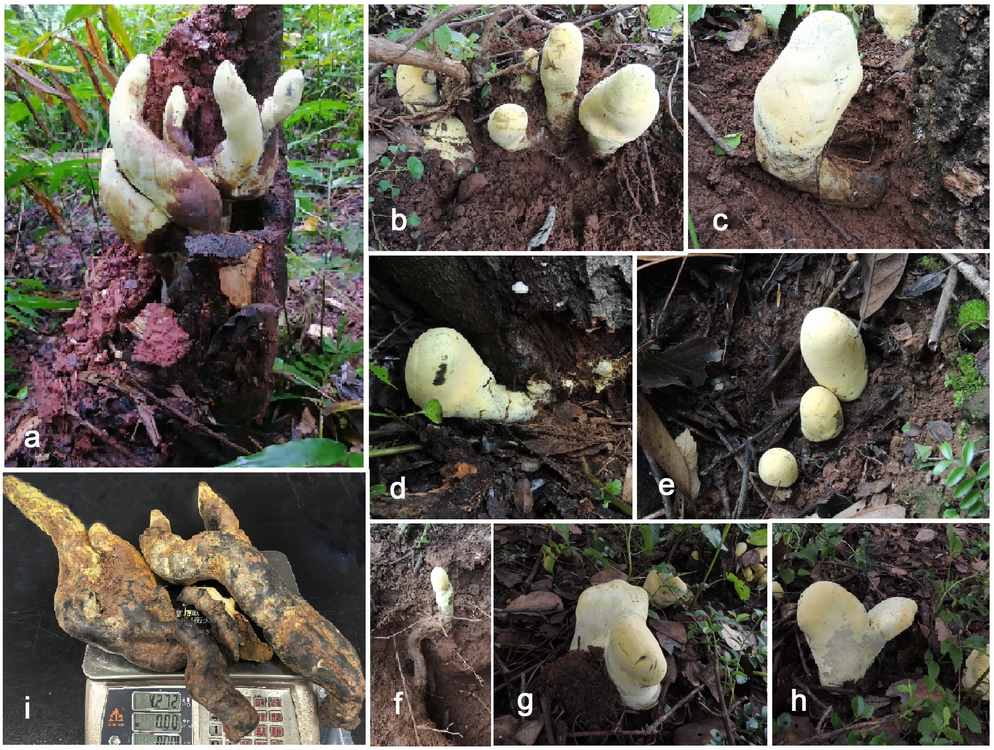
The newly described species, Dianjunus rex, or “King of Dian,” named for an ancient Chinese kingdom, produces vertical fruiting bodies up to 20 inches high and weighing up to 5 pounds.
Scientists in China, Thailand, and Mexico made the discovery, which constituted not only its own new genus, but whole new family of fungi within the Phylum of Ascomycota.
Analysis of its genome suggests that the new family arose approximately 65 million years ago, strikingly soon after the Cretaceous-Paleogene mass extinction which killed off the dinosaurs, when new niches for wood-decomposing fungi, a niche which “D. rex” inhabits still to this day, may have opened up.
“This remarkable species represents a new fungal family, Dianjunaceae, and provides a rare window into the evolution of extreme fungal body forms,” said Dr. Indunil C. Senanayake, an associate professor at the Germplasm Bank of Wild Species of the Kunming Institute of Botany in China and corresponding author of the new study, published in Frontiers in Fungal Biology.
“The discovery illustrates how much fungus biodiversity remains to be discovered in East Asian forests.”
During fieldwork in a mix of temperate coniferous forests and tropical rainforest in the province of Yunnan, scientists from the Kunming Institute found large, whitish, fruiting bodies (called stromata) clearly belonging to an unknown ascomycete fungus growing on the woody roots of Chinese cork oak.
With more than 64,000 species, Ascomycota is the largest group of fungi. They don’t grow true mushrooms but instead release spores from tiny, sack-like structures inside or on the surface of such fruiting bodies.
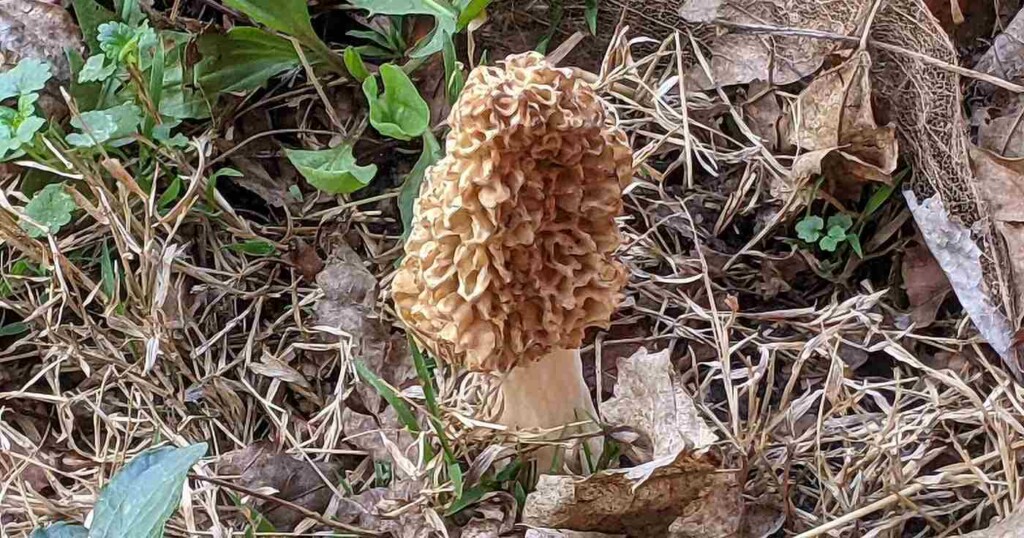
Though a reader might not know any Ascomycetes by name, they’re one of the most influential group of organisms on the Earth next to humans. Among those 64,000 species one finds various molds and yeasts that create bread, beer, wine, penicillin, Stilton, Roquefort, Brie, Zola, and Camembert cheese, soy sauce, sake wine, and the organ-rejection inhibitor ciclosporin. They also include the prized morels, truffles, cordyceps, and dead-man’s fingers.
If one were to make a “cons” list of similar gravity, it could include species that cause Dutch elm disease, chestnut blight, apple blight, powdery mildew, histoplasmosis, ergot, the most common lung infection in humans (Aspergillus fumigatus), vaginal yeast infections, and valley fever.
And out all these and so much more, D. rex is the biggest of them all, a true king among fungi.
Collecting the fruiting bodies they found, the team of scientists grew spores on media to study the morphology of the fungus, and also sequenced its genome.
Genetic results confirmed by a detailed study of its morphology revealed that Dianjunaceae could be set within the order Xylariales. The closest known relative to D. rex is Graphostroma platystoma, which grows on dead hardwood across the Northern Hemisphere and by itself forms the family Graphostromataceae.
From a ‘molecular clock’ analysis of the new species’ DNA, while comparing it to the genome of hundreds of fungi with known evolutionary age, the authors were able to estimate that the Dianjunaceae arose around 65 million years ago. Strikingly, this is only one million years after the Cretaceous-Paleogene mass extinction event—famous for wiping out the dinosaurs besides countless other animals and plants.
“This timing raises an intriguing possibility. After the mass extinction, forests experienced dramatic changes, including the sudden availability of large amounts of dead plant material,” said Senanayake. “For wood-associated decomposing fungi, such environmental disruption may have created new ecological opportunities.”
FUNGAL NEWS FEEDS: Scientists Map Underground Fungal Networks and Find They Cover 62 Quadrillion Miles
Yet those days are long gone, and D. rex still grows so uncommonly big; why? Until now, the record-holders among ascomycete fruiting bodies measured 20 to 30 centimeters tall, around half the size of D. rex.
“A fruiting body which towers above surrounding vegetation and debris could have better dispersal of spores by wind in dense forests. However, such a large structure requires substantial energy investment, suggesting that this strategy likely evolved only where the ecological benefits outweighed the costs,” hypothesized Senanayake.
Though sharks, sea turtles, and crocodilians are famous for having remained relatively unchanged from an evolutionary standpoint for hundreds of millions of years, there are some plants—static though they may be—which have shaded both dinosaurs and humans; most notably the ginkgo biloba, but also the so-called “dinosaur evergreen” of Australia.
BIGGEST MUSHROOMS IN THE LAND: Giant Puffball Mushroom Feeds Her Family for a Week
The researchers predicted that more discoveries of fungi from subtropical China lie in store.
“This region combines exceptional habitat heterogeneity, climatic stability, and complex biotic interactions that promote fungal diversification,” said said Senanayake.
“Historically, however, fungal diversity in these ecosystems has been underestimated due to logistical difficulties in field sampling, the seasonal and cryptic nature of fungal fruiting, and a historical emphasis on economically important fungi.”
SHARE This Fantastic Surprise And Discovery With Your Friends Who Love Science…